
In the recent years, we’ve been witnessing exponential growth of B2B marketplaces and dramatic increase of online sales all over the world. Online marketplaces provide connection between businesses and suppliers, allowing them to browse, select, and purchase products and services easily and instantly. Being the most active business players in today’s world that is rolling toward accepting total digitalization of services and business operations, banks cannot stay aside of the process, of course.
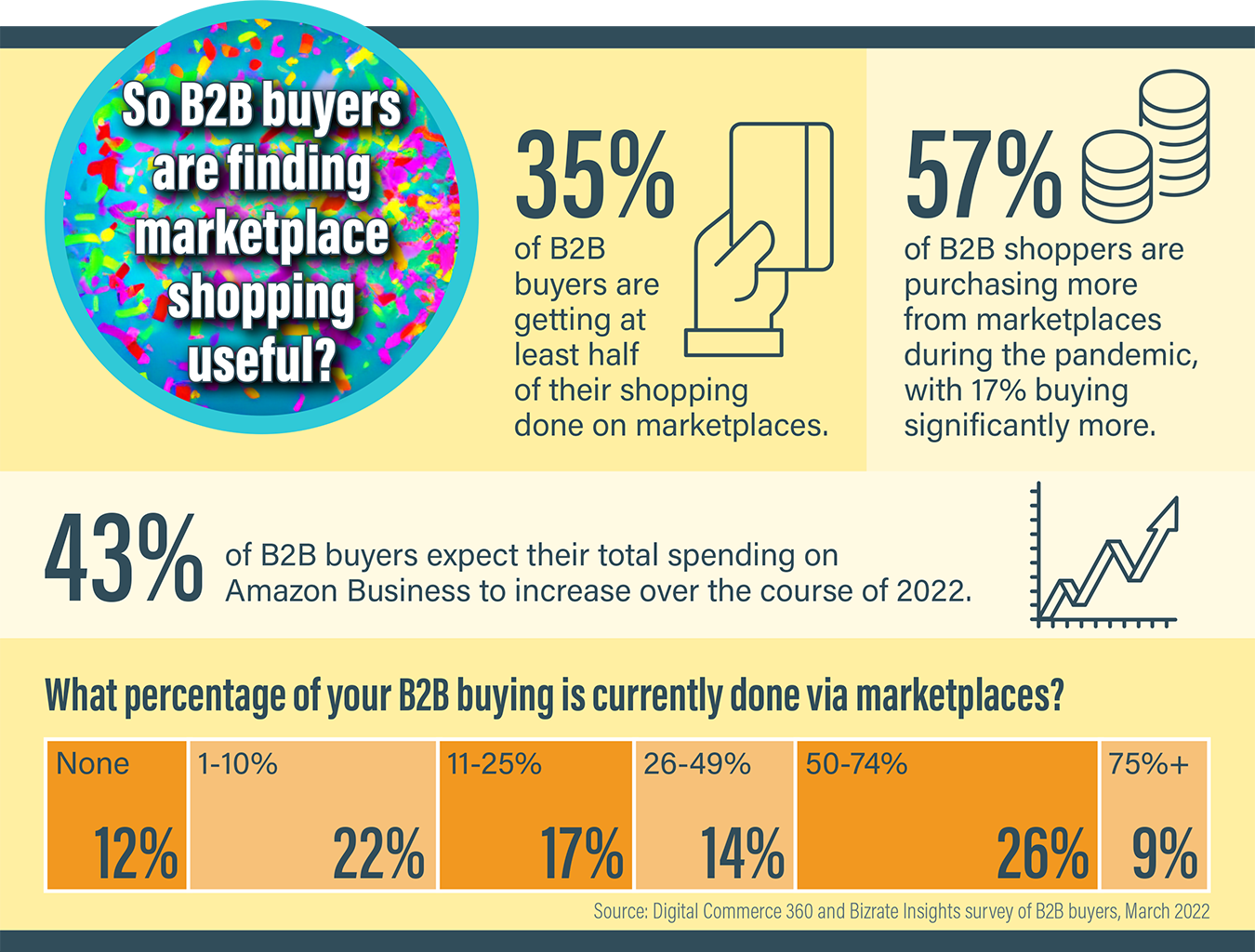
According to a 2022 Digital Commerce 360 report, after the pandemic, 57% of buyers started purchasing more from B2B online marketplaces during the pandemic, and 35% of B2B buyers today do at more than half of their shopping on marketplaces. Let us see how the global customers’ attitude toward buying online has influenced the banking industry.
Putting it simply, a B2B marketplace is an online platform that connects businesses with suppliers. These platforms offer multiple products and services and are accessible for businesses of all sizes in all industries, worldwide.
A seller can use online marketplace platforms to access millions of potential customers, no matter where they are located; moreover, the transactions happen easily, safely and instantly. A user of an online marketplace platform can increase sales and expand their customer base amazingly fast; The online marketplaces can also be used by sellers of services to manage their online presence (Eg: by placing their product/service catalogs, offering information/services, and setting up various ways of communicating with customers).
The growing popularity of such online platforms is changing the global business landscape in several ways. First of all, we witness increasing competition among banks as providers of services, which puts pressure on them to offer better services at competitive prices.
Secondly, online marketplace platforms drive innovation in the banking industry. They encourage banks to come up with new services that meet the needs of their customers. As a sequence, they encourage the development of new technologies and tools that make the management of their online presence easier, and help improve customer experience.
Finally, the recent shift toward the use of online marketplace platforms has influenced the way that businesses interact with each other. Business players envision multiple opportunities for collaboration and partnerships, and these processes are happening with noticeable acceleration.
Banks all over the world are not the exception, of course. Business analysts envision considerable increase in the efficiency of banking services in 2023 as the sequence of accepting the new technological ‘standard’ by majority of banks that revised their strategies in connection with the trends suggested to us by the speedy advent of the online operations technology. These are the most urgent tasks named by bank managers as their banks’ core strategies to be pursued in 2023:
- Leaving most of the manual processes in the past (eg.: sending invoices, negotiating prices, and handling payments) and turning toward automation if all processes;
- Ensuring better and simpler reach to large user bases;
- Increasing number of operations/transactions;
- Making every online transaction simple and fast;
- Improving transparency of operations;
- Offering greater customization options for customers;
- Availability of enhanced data analytics that helps optimize business strategies and improve decision-making;
- Seamless transaction process;
- Providing better customer experiences;
- Ensuring safety of all online operations;
- Offering new ways of customer service and support.
The most progressive banks in 2023 seem to follow the example of the best B2B E-commerce Marketplaces like Alibaba.com, Amazon.com, Tradewheel.com, GlobalSources.com, B2usa.com, MFGTrade.com, ThomasNet and others. No doubt, this tendency is going to expand and accelerate, and by the beginning of 2025, we can expect that most of the banks all around the world will accept operating via online marketplace platforms as a ‘standard’ and the only possible way of business operation.
We are quickly approaching the era of total digitalization, and soon we may find ourselves living in the world with no physical banks, as they will no longer be needed.
If you are planning to set up a digital transformation process for your business and have questions about the project, you are welcome to contact me for more information.
 BD&C - Business Development & Consulting
Leave a comment