Here’s a number that keeps sales managers up at night. According to Gartner research, B2B buyers spend only about 17% of their buying journey meeting with potential suppliers. If they’re comparing several suppliers, Gartner notes, any single sales rep may get just 5% to 6% of that time. The rest? Buyers are researching on their own, very often on your website.
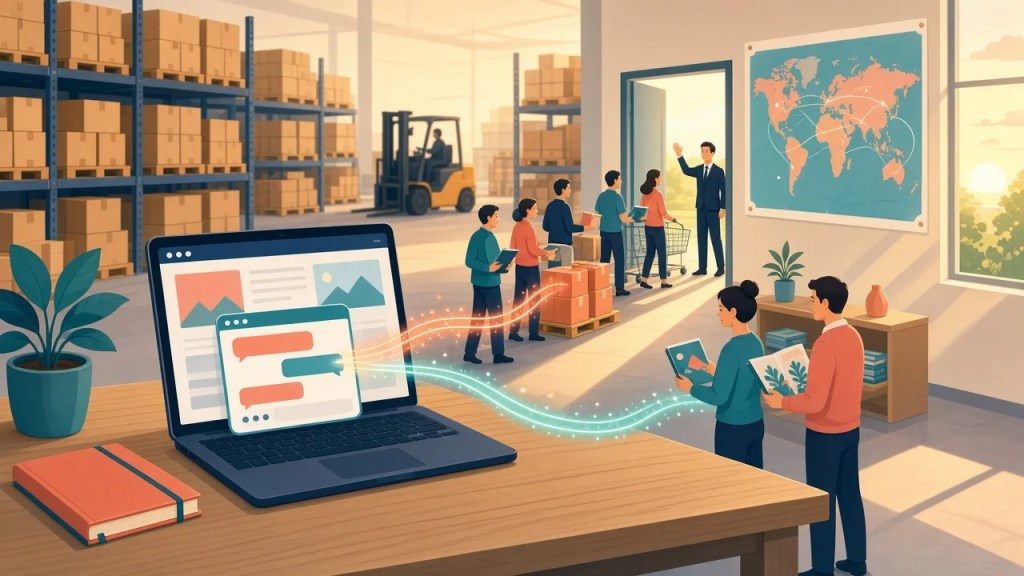
That’s exactly why a B2B AI chatbot has become such a useful teammate. It talks to every wholesale or business visitor the moment they arrive, asks a few friendly qualifying questions (how much, where, by when), and hands your sales team a short, clear summary of the people who are genuinely ready to buy. Your team stops chasing “just looking” emails and starts the day with real conversations.
We talk with small B2B businesses every week, and we hear the same story in different accents: the contact form fills up, half the messages are vague, and the best leads wait in the same pile as the curious ones. Let’s fix that.
Why B2B inquiries are different from everyday questions
A shopper asking “Do you ship to Canada?” needs one good answer. A business buyer asking about wholesale needs a conversation. They want to know your minimum order, whether you deliver to their region, how pricing changes with volume, and whether you can meet their deadline. You, on the other hand, want to know if they’re a fit before you spend an hour on a custom quote.
In other words, both sides are trying to qualify each other. Traditionally, that happens over three or four emails spread across a week. By the time you reply to “Hi, can you send your price list?”, the buyer may already be talking to someone else who answered faster.
A lead qualification chatbot doesn’t replace that conversation. It simply starts it right away, at 11 p.m. on a Sunday if that’s when the buyer is browsing.
What a good B2B chatbot conversation looks like
Examples help more than theory here. Picture a small ceramics studio that sells mugs online and also supplies gift shops. This is an imagined exchange, but it’s the kind of conversation we design for:
Visitor: Hi, do you work with retailers? I own two gift shops.
Assistant: We’d love to! Our wholesale program is for shops and cafés. So I can point you to the right person, roughly how many pieces are you thinking of for a first order?
Visitor: Maybe 200 mugs, mixed designs.
Assistant: Great, that fits our wholesale range. Where are your shops, and when would you need the order?
Visitor: Both are in Ohio. Ideally before mid-January.
Assistant: Thanks! Our wholesale page covers delivery and lead times, and our team handles mixed-design orders personally. Could I take your name and email so our wholesale manager can send you a quote? I’ll include everything you’ve told me, so you won’t have to repeat it.
Notice what happened. The visitor got friendly, useful answers. The studio learned the volume, region, timeline and type of business in under a minute. And the wholesale manager receives an inquiry that reads like a briefing, not a riddle.
Four questions that separate buyers from browsers
You don’t need an interrogation. Most B2B qualification comes down to four simple things:
- Volume: How much do they need, and is it a one-time order or ongoing supply? This tells you if they meet your minimums.
- Region: Where are they, and can you deliver there? No point preparing a quote for a country you don’t ship to.
- Timeline: When do they need it? “Next week” and “sometime next year” call for very different follow-ups.
- Fit: Who are they? A retailer, a distributor, an office manager buying for a team? Each may need a different person or offer.
Keep it to the questions you really use. Every extra question is a small toll booth on the road to your sales team, and nobody enjoys toll booths. If you’d like more on asking for details without scaring people off, our post on pre-chat forms and customer trust explores the balance.
Browsers aren’t the enemy
Here’s a comparison we like. A good B2B chatbot works like a friendly host at a trade show booth. The host greets everyone, chats with the curious student, hands a brochure to the competitor pretending not to be a competitor, and walks the serious buyer straight over to the sales lead. Nobody gets turned away rudely. Everyone gets what they came for.
Today’s browser may be next quarter’s buyer. Someone researching suppliers for a future project still deserves helpful answers about your products, materials and policies. The chatbot can serve them well without pulling a salesperson away from a hot deal. And because conversations show what people ask about, you learn what your website should explain better.
Where the agent should step back
A B2B AI chatbot should be helpful, not overconfident. Custom pricing, contract terms, special discounts and anything that needs a judgment call belong with a person. The agent’s job is to gather context and make the handoff smooth. We wrote a whole guide on when an AI agent should hand the conversation to a human, and the same rules apply doubly in B2B, where one order can be worth a month of retail sales.
It also helps to publish the basics clearly on your site: minimum order quantities, delivery regions, typical lead times and how to request a quote. The agent answers from your content, so clear pages make for clear answers, and clear answers make quote request automation feel natural instead of robotic.
How we approach B2B website lead generation at BizDriver
When we built BizDriver, we wanted small teams to get the benefit of a dedicated front-desk rep without hiring one. You enter your website address, and BizDriver creates an AI agent built from your URL in minutes, matching your brand’s colors, logo and style. According to bizdriver.ai, it answers questions from your website, documents, FAQs and product information, qualifies visitors’ needs, and collects contact details together with the conversation context. It then routes each inquiry to the right person or team. If a buyer is ready to talk, visitors can even book a meeting in an open slot, synced with Google Calendar or Microsoft Outlook.
We’ve also compared this approach with simply pointing people to a general AI tool in our post on AI agents for lead generation vs ChatGPT. And if you sell B2B services, our article on Clutch as your B2B business’s secret weapon pairs nicely with this one: reviews bring buyers to your site, and your agent makes sure they don’t leave empty-handed.
Let your sales team start with the good part
B2B buyers do most of their homework alone, so your website has to do more of the talking. A B2B AI chatbot greets every visitor, answers the easy questions, asks about volume, region and timeline, and passes your team the conversations worth having. Browsers still leave happy; buyers move faster.
Curious how it would work with your own catalog? Try a free AI chatbot for your website on BizDriver’s Free Forever plan: $0, 500 messages a month, no credit card and not a trial. Or book a 1-on-1 demo, and we’ll gladly walk through your wholesale questions with you.


Leave a Reply